
Delivering a Lift Station Solution in Days
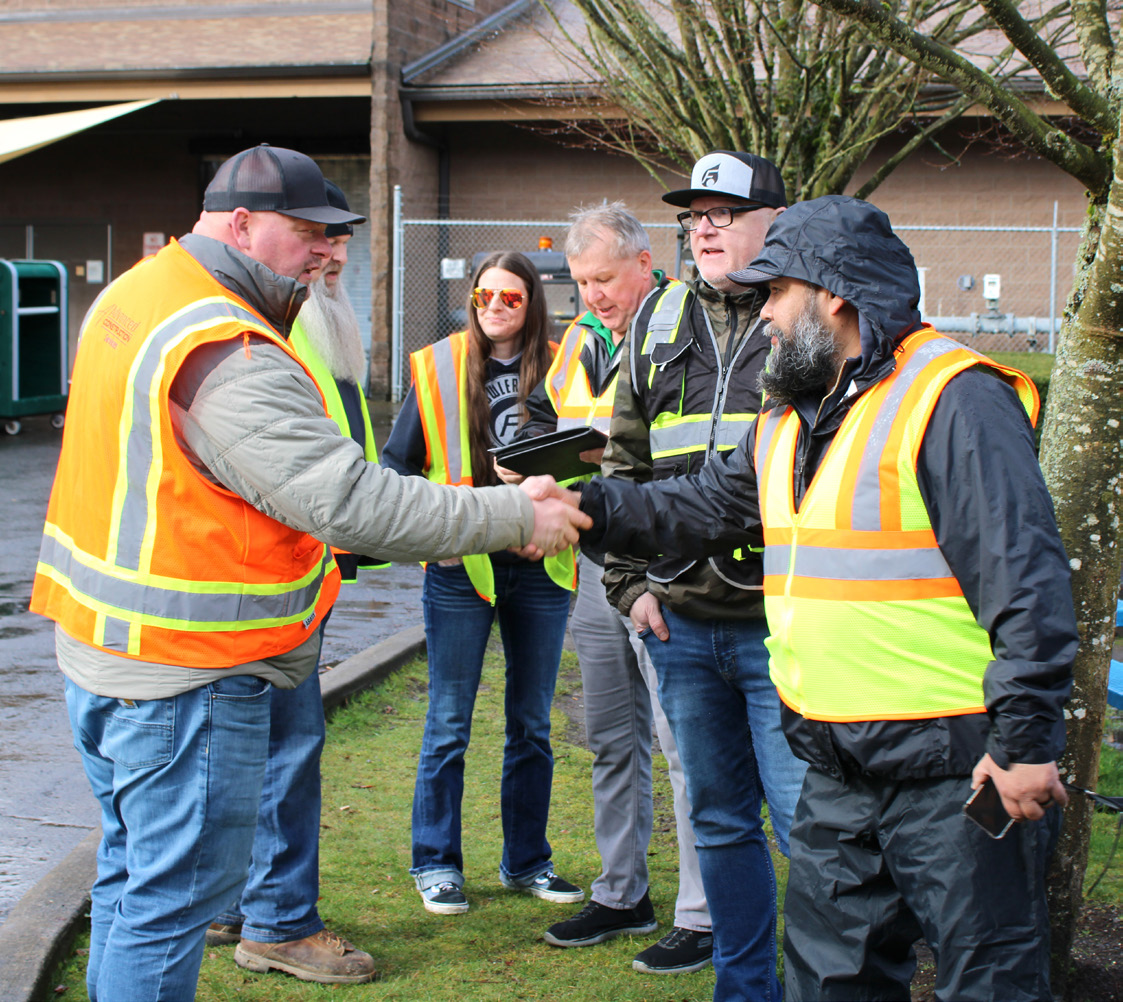
The Client
Emergency Lift Station Rebuild Restores Critical Wastewater Operations at Hospitality Facility
When a critical wastewater lift station begins showing signs of failure, operators often have time to plan
For one large hospitality and entertainment destination in the Pacific Northwest, that window was closing rapidly. For months, A Advanced Services had been monitoring performance issues within the facility’s sewage lift station. Pumps were experiencing high amperage draw, tripping overloads, and requiring repeated service calls. As conditions worsened, inspections revealed significant wear inside the pumping system.
“The impellers were just eroded away,” said Andrew Cushman, project manager at A Advanced Services. “They weren’t processing material the way they should have been. Even when they weren’t moving material, they were still pulling high amperage and tripping breakers.” The lift station served portions of the resort’s convention and restroom facilities, making reliability essential for daily operations. With the system continuing to deteriorate, A Advanced reached a critical conclusion: repair was no longer enough.
The facility needed a complete lift station rebuild.
The Problem
Maintaining Operations While Planning a Rebuild
For a major hospitality destination built around a year-round indoor waterpark, service interruption was not an option.
“Seeing as how the entire [facility] is dependent on that lift station, it definitely was something that needed to be addressed urgently,” said Dustin Dietzman, account manager at A Advanced Services.
While the permanent solution was developed, A Advanced implemented an aggressive temporary pumping operation to keep the facility fully operational.
Crews initially pumped wastewater from the station and transported it to a nearby disposal facility before later coordinating approval to discharge at a downstream sewer location. Depending on system demand, technicians were servicing the site three to four times per day while monitoring levels around the clock.
A Advanced even assigned personnel who lived near the facility to provide rapid response coverage and reduce travel delays. Despite the deteriorating condition of the lift station, the temporary pumping strategy successfully prevented service interruptions and wastewater backups throughout the facility
IDENTIFYING A REPLACEMENT
SOLUTION
As bypass operations continued, A Advanced, Gordon Associates, HD Fowler, and Liberty Engineered Products worked to develop a permanent replacement strategy.
The challenge extended well beyond simply matching pump performance
The team needed to evaluate hydraulic requirements, incoming electrical service, control compatibility, discharge configuration, guide rail geometry, and physical fit within the existing lift station. Any mismatch could create installation delays during an already compressed timeline.
Adding further complexity, the station contained approximately 25 feet of vertical discharge piping constructed from six-inch ductile iron. Existing infrastructure had to be carefully measured and evaluated before any equipment could be specified.
“The hardest part in that whole thing was really how we were going to make the connection for discharge,” Cushman said. “We spent a lot of time taking measurements and preparing for multiple scenarios before we ever started the rebuild.”
According to Kris Hamal, president of Gordon Associates, Liberty’s engineering and technical support teams responded within hours to verify compatibility requirements and confirm that a Liberty solution could be integrated into the existing infrastructure.”
LIBERTY ACCELERATES MANUFACTURING AND DELIVERY
The project became even more urgent when replacement equipment from the incumbent manufacturer carried a projected six-to-eight-week lead time.
With bypass pumping operations continuing daily, the project team needed a solution measured in days, not weeks
Liberty responded by rapidly manufacturing and preparing replacement pumps for shipment while
Gordon Associates, HD Fowler, and A Advanced finalized logistics.
Dietzman said the initial expectation was approximately 10 to 14 days.
Instead, the pumps arrived in roughly four days.
“We quoted the client 10 to 14 days, and Liberty sent us these specifically designed pumps within four days,” Dietzman said. “That was amazing.”
The accelerated delivery allowed installation planning to move forward much sooner than expected and dramatically reduced the duration of the temporary pumping operation.
REBUILDING THE LIFT STATION
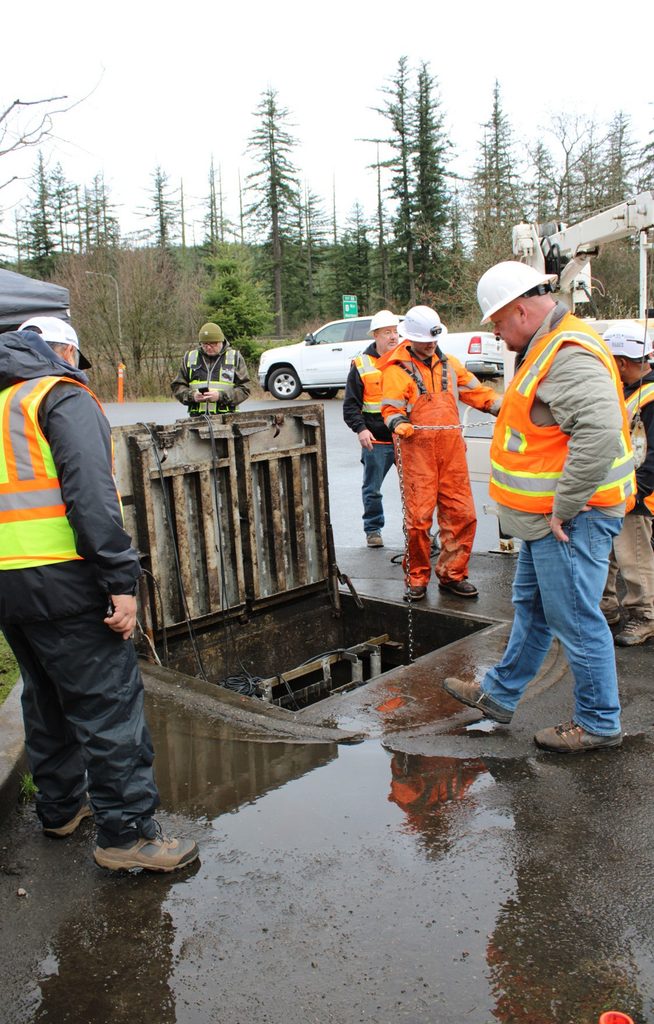
With equipment onsite, A Advanced transitioned from emergency response to full reconstruction
The project involved substantially more than replacing pumps.
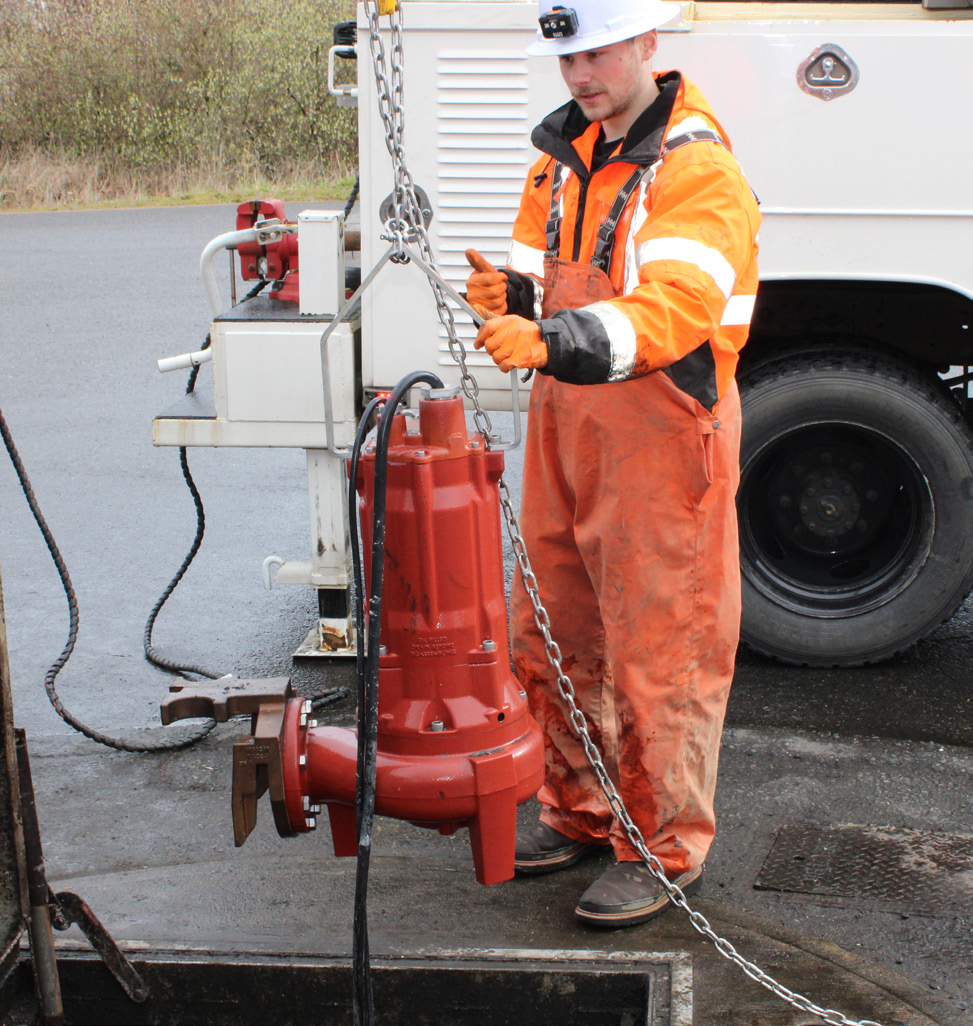
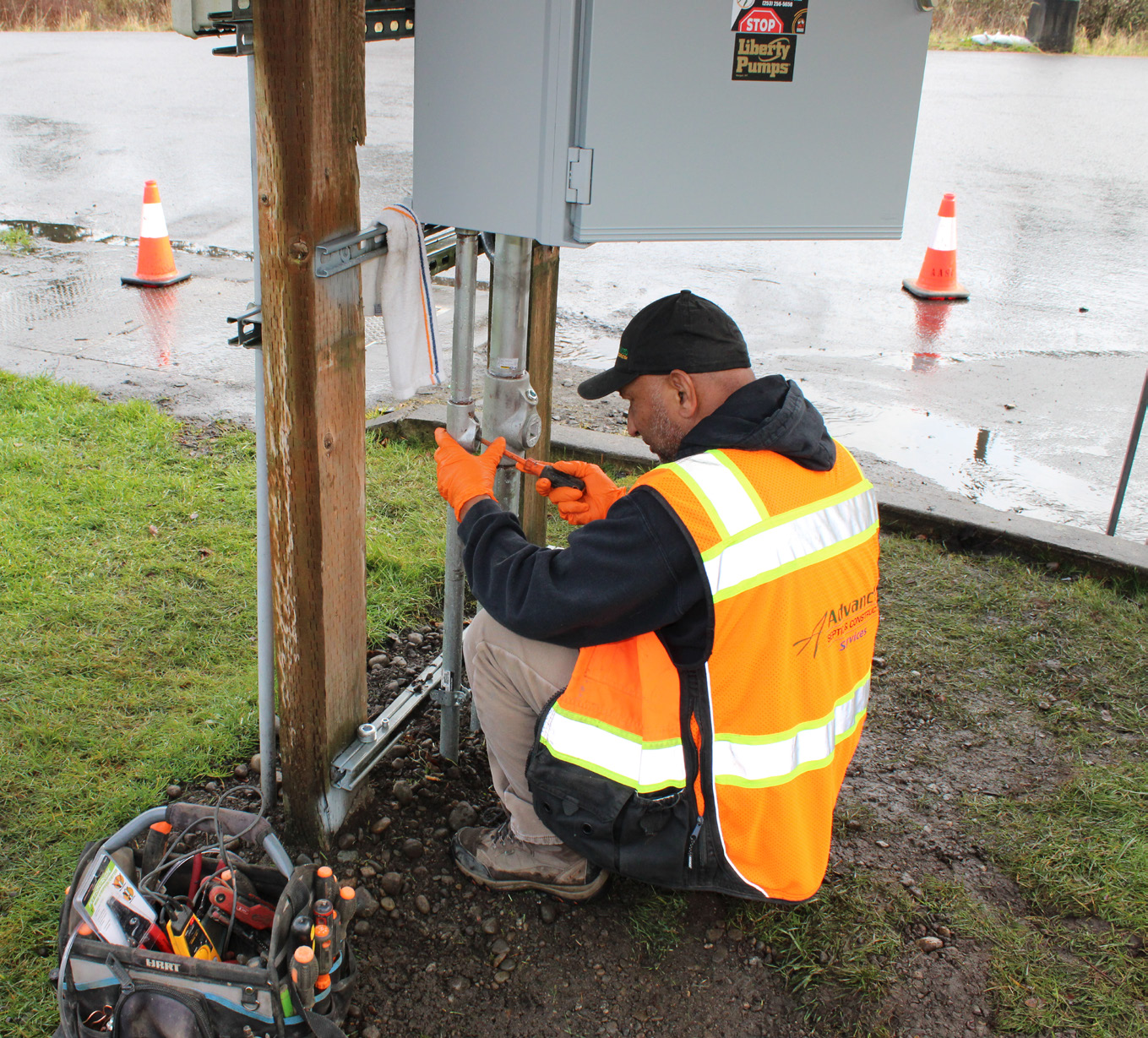
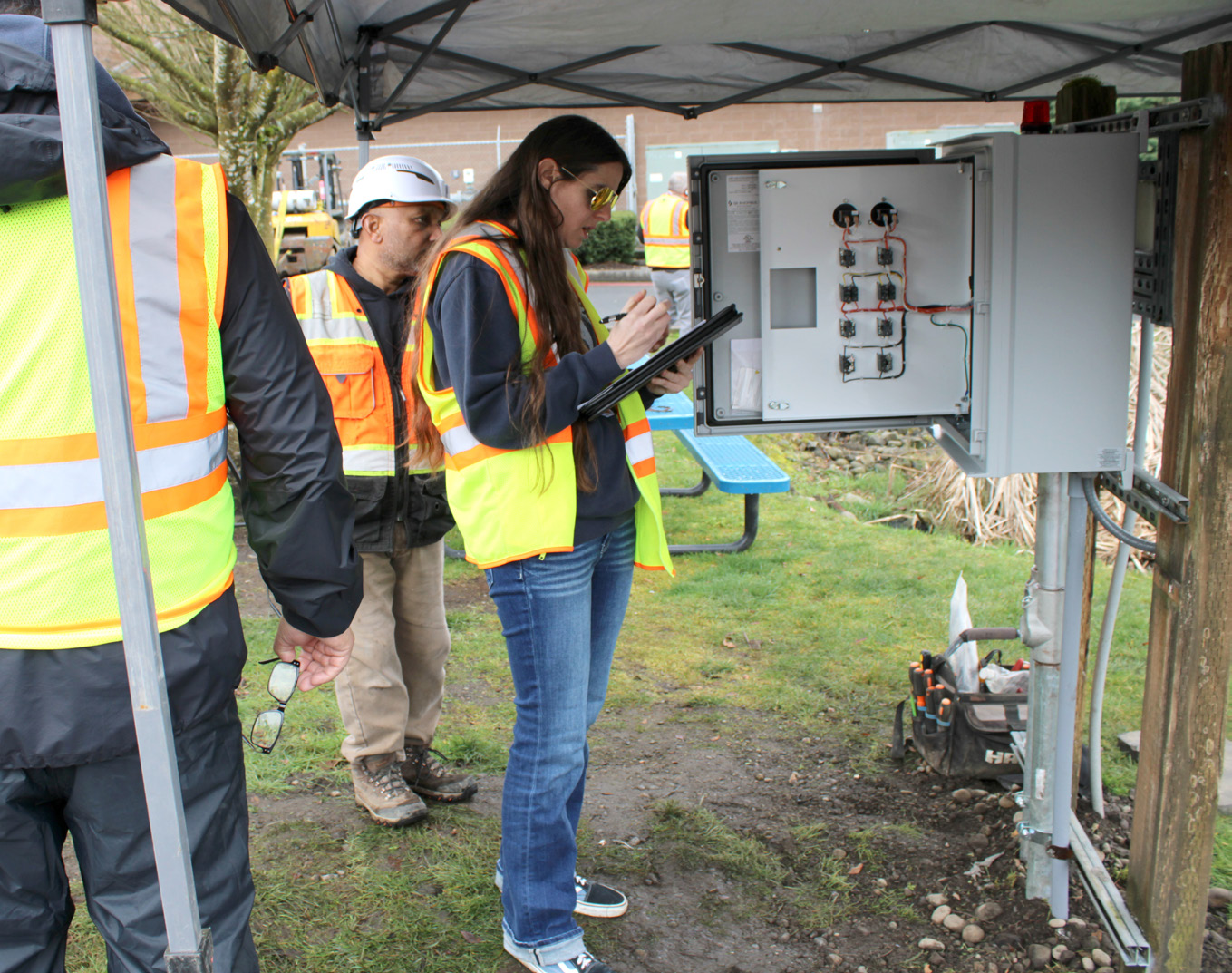
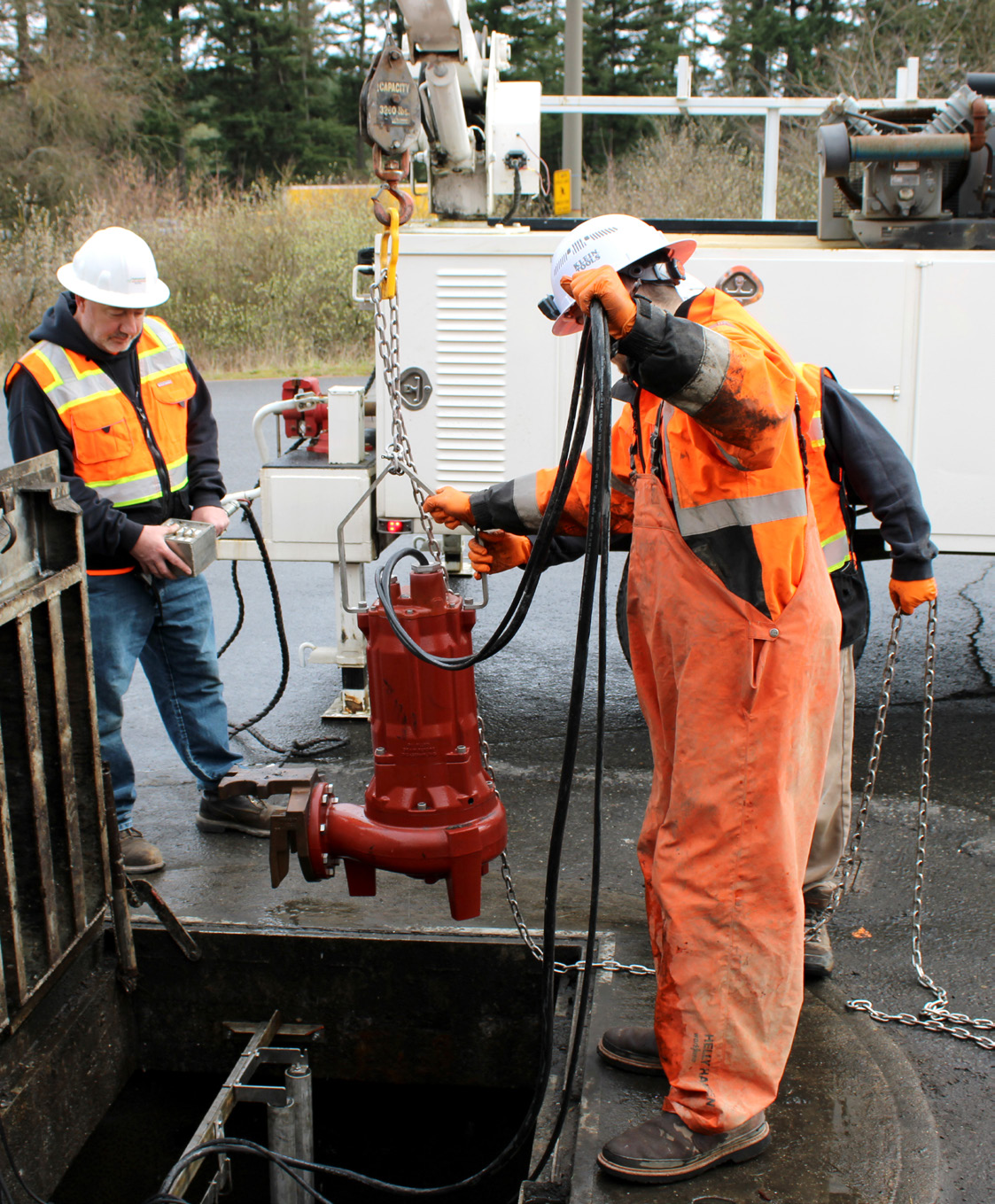
Crews rebuilt the guide rail system, installed new Liberty pumps, modified discharge connections, upgraded electrical infrastructure, improved float configurations, and reworked portions of the control system.
Electrical improvements became a significant component of the project. Previous service work had revealed issues associated with existing junction boxes and wiring configurations located in low-lying areas
susceptible to water intrusion.
During the rebuild, crews rerouted electrical and communication pathways, created more direct connections between the control
panel and lift station, and eliminated potential points of future failure.
As often happens in underground infrastructure work, field conditions required continual adjustments.
“You can take as many measurements as you want, but as you start doing things, you realize you didn’t account for something,” Cushman
said. “We prepared for that up front.”
The project team arrived with multiple contingency plans and sufficient materials to adapt as conditions evolved during installation.
A FASTER RECOVERY AND A BETTER LONG-TERM SYSTEM
The rebuilt lift station was commissioned with support from Liberty, Gordon Associates, HD Fowler, and A Advanced Services. Startup proceeded successfully, and the facility returned to normal operation
Just as importantly, the project left the hospitality facility with a system that was easier to maintain and better positioned for long-term reliability. Guide rail access was improved. Float arrangements were modernized. Electrical routing was redesigned. Maintenance personnel could now remove pumps more efficiently and service the station with fewer obstacles.
For A Advanced, the project demonstrated what is possible when contractors, distributors, representatives, and manufacturers align around a shared objective.
For Liberty, it demonstrated the value of responsive engineering support, accelerated manufacturing, and equipment compatibility during a high-consequence infrastructure failure.
“Every time we said we would do something, we not only did it, we exceeded their expectation,” Hamal said
When a critical lift station serving one of the region’s largest hospitality destinations reached the point of failure, Liberty helped turn a potential operational crisis into a successful system rebuild completed on an accelerated timeline.
“We quoted the client 10 to 14 days,
and Liberty sent us these specifically
designed pumps within four days.”
— Dustin Dietzman, A Advanced Services
A System Designed for Growth
What began as a solution to a problem has evolved into a framework for expansion. Kingsland is growing rapidly, adding new subdivisions, businesses, and recreational areas every year. KMUD has doubled its service area in recent years, laying new lines weekly. Every new connection is built with a Liberty pump.
“We’re not just replacing old pumps anymore,” said Stewart. “We’re building out the future. Every new home, every new business— Liberty is at the core of it.”
Liberty’s product offering has grown along with KMUD’s needs. In addition to the LSG200 Omnivore® pumps, the district added Liberty’s three-horsepower and ten- horsepower Monovane solids handling pumps for its larger lift stations, addressing both volume and odor control. “The odor around our lift stations has dropped by 90 percent due to the pump’s performance,” Stewart said. “That’s a big win for us—and for the neighbors.”
Results that Speak for Themselves
The impact of KMUD’s shift to Liberty Pumps systems is best measured by the dramatic drop in service calls and maintenance costs. Stewart estimates that the district was able to cut 30 percent in overtime labor and emergency service calls, saving tens of thousands of dollars annually.
Beyond the numbers, however, the biggest change has been cultural. “The community sees the difference,” Stewart said. “There’s less stress, fewer complaints, and more trust in the utility district.”
“Liberty didn’t just sell us a pump. They gave us a system that works—a system that adapts, grows, and lasts. And it’s become a real partnership.”
Project Snapshot
Delivering a Lift Station Solution in Days
Application
Wastewater lift station serving portions of a
resort’s convention and restroom facilities
Project Type
Emergency lift station rebuild
Key Stakeholders
- Liberty Engineered Products
- Gordon Associates
- HD Fowler
- A Advanced Services
Challenge
Simultaneous failure of two sewage pumps
Temporary Operations
Continuous bypass pumping to maintain service
Pumping Frequency During Emergency
3–4 pump-outs per day
Lift Station Depth
Approximately 25 feet
Discharge Piping
6-inch ductile iron
Original Replacement Lead Time
6–8 weeks
Liberty Delivery Timeline
Approximately 4 days
Outcome
- Facility remained operational throughout the project
- Complete lift station rebuild completed
- Successful startup and commissioning
Key Challenges
- Simultaneous pump failure
- Active hospitality facility requiring continuous operation
- Emergency bypass pumping
- Deep lift station environment
- Existing discharge infrastructure requiring retrofit compatibility
- Accelerated manufacturing and logistics timeline
- Electrical system upgrades during reconstruction
- Multiple stakeholder coordination